

Your GE refrigerator shouldn’t leave food at risk. Discover the most common reasons it stops cooling and when to call a professional for reliable repair.
General Electric fridge not cooling
If you’re Googling “general electric fridge not cooling,” chances are you just opened your refrigerator and something felt off. Maybe the milk isn’t cold. Maybe the freezer seems fine, but the fridge is warm. Or maybe everything inside feels like it belongs on the counter.
We see this every week in Denver homes.
The good news? Most GE fridge issues follow predictable patterns. The key is identifying which one you’re dealing with before the problem gets expensive.
Freezer Works, Fridge Doesn’t
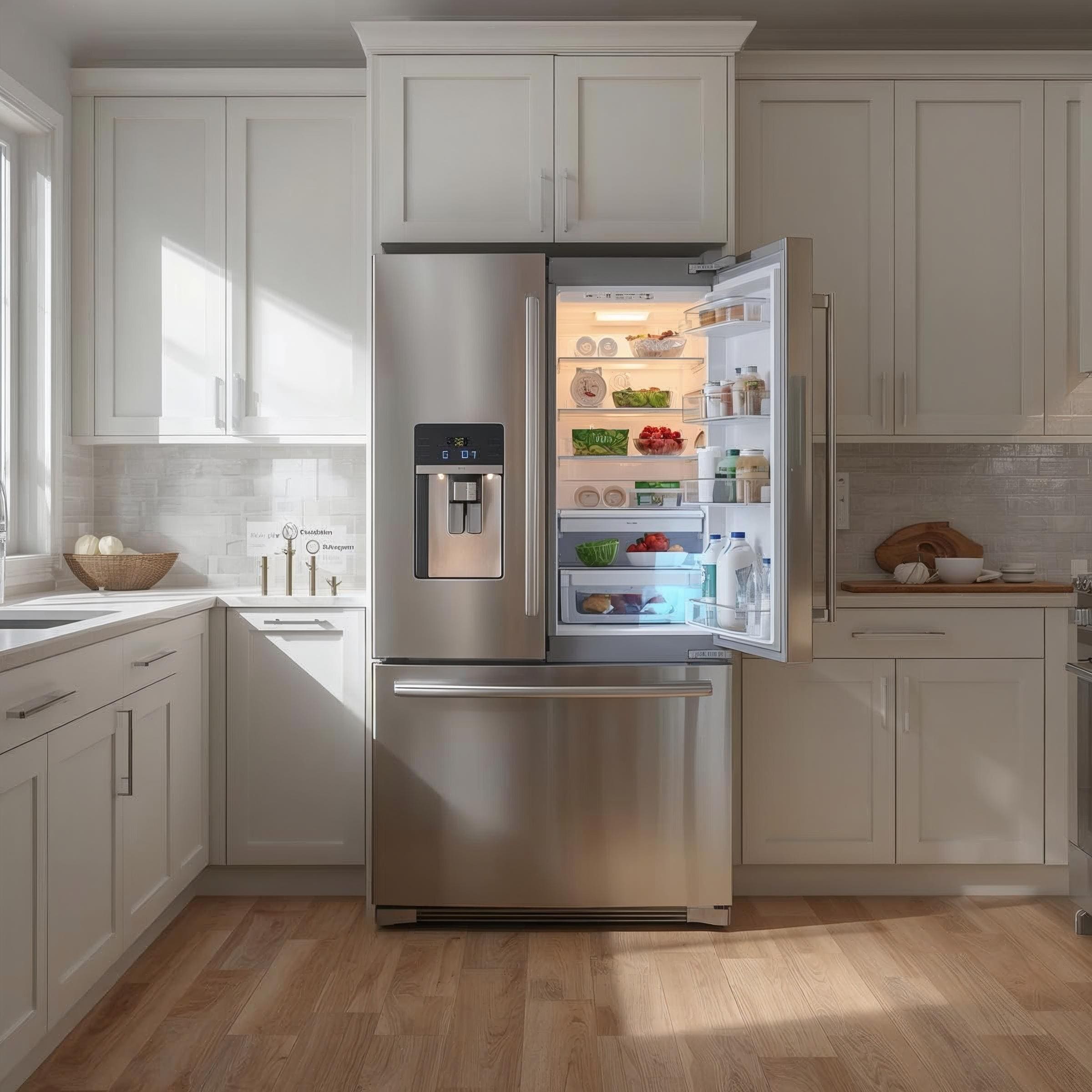
Your freezer is cold, ice is solid… but the refrigerator section is warm.
What’s happening?
GE refrigerators create cold air in the freezer and push it into the fridge compartment. If that airflow gets blocked or interrupted, the fridge warms up first.
Common causes:
• Evaporator fan motor not running
• Air damper stuck closed
• Ice buildup restricting airflow
If you don’t hear air moving when the freezer door is open, that’s a clue. This is where professional GE fridge repair usually comes in.
Both Sections Are Warm
If the freezer and fridge are both not cooling properly, the issue is likely deeper in the system.
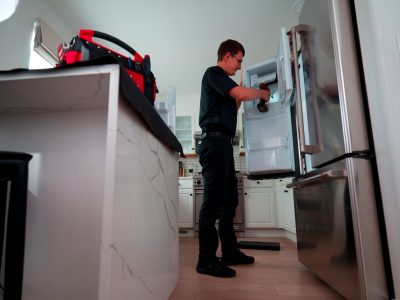
Here’s what we check during a refrigeration repair service call in Denver:
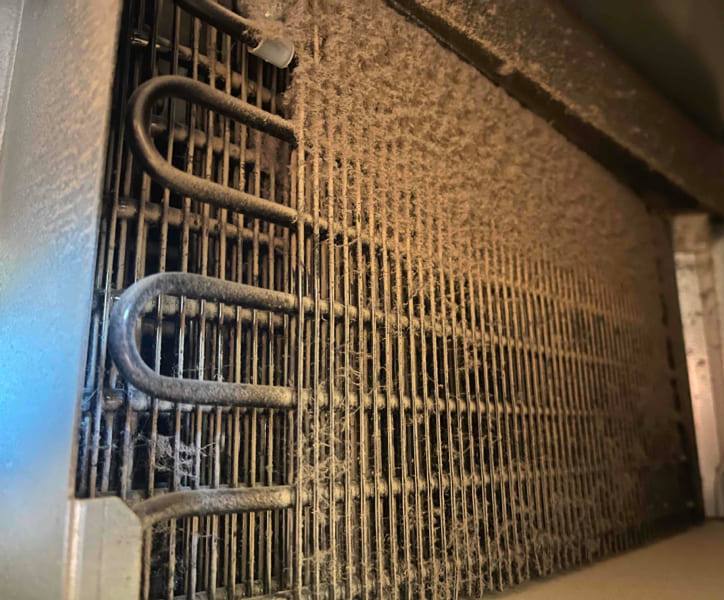
Dirty condenser coils
Dust builds up fast here. When coils can’t release heat, the system struggles. This can slowly reduce cooling performance and overwork the compressor.
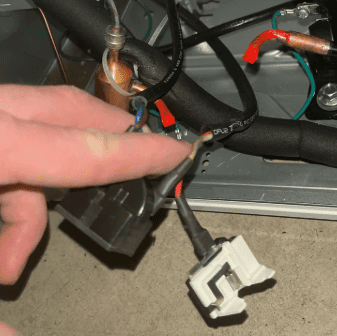
Failed start relay
If you hear clicking sounds from the back of the fridge, the compressor may be trying to start but failing. Often, replacing the relay fixes it.
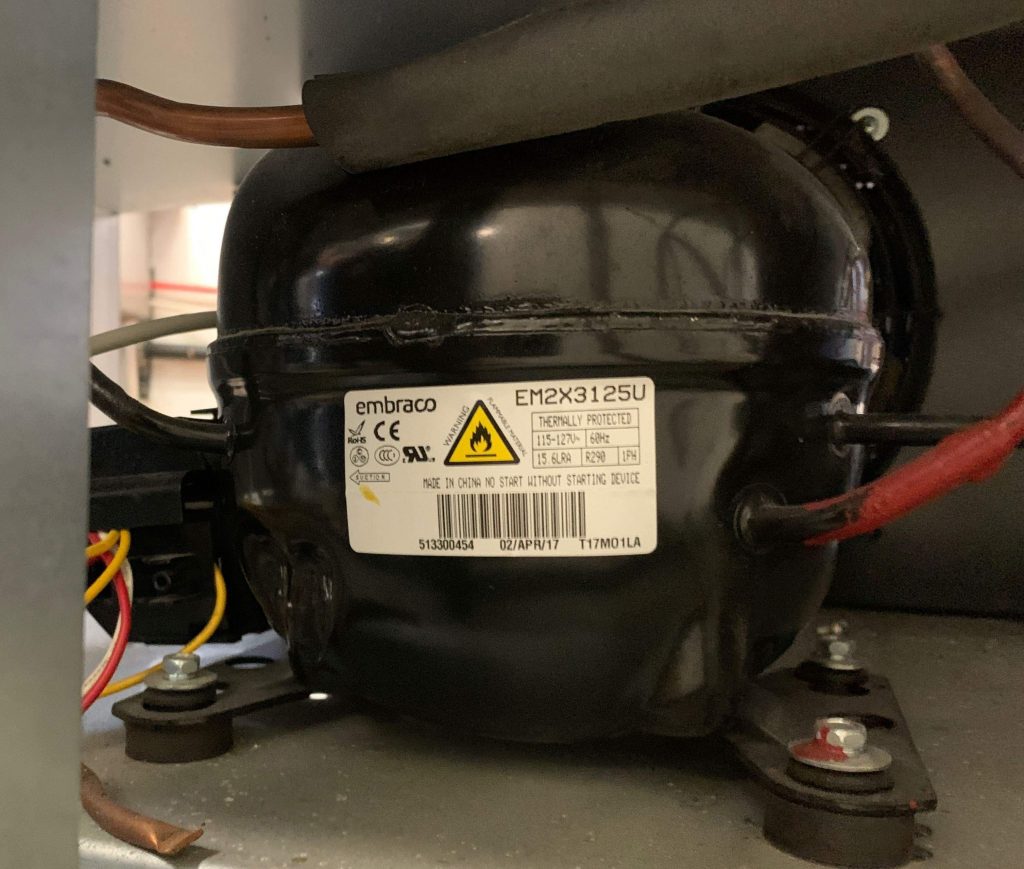
Compressor issues
More serious, less common, but possible. Especially in older units.
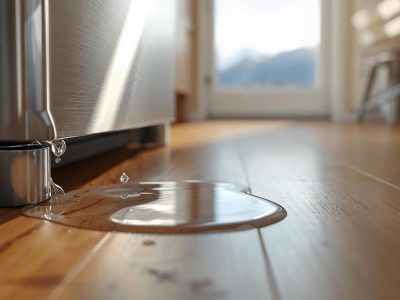
Water Leaking From GE Fridge?
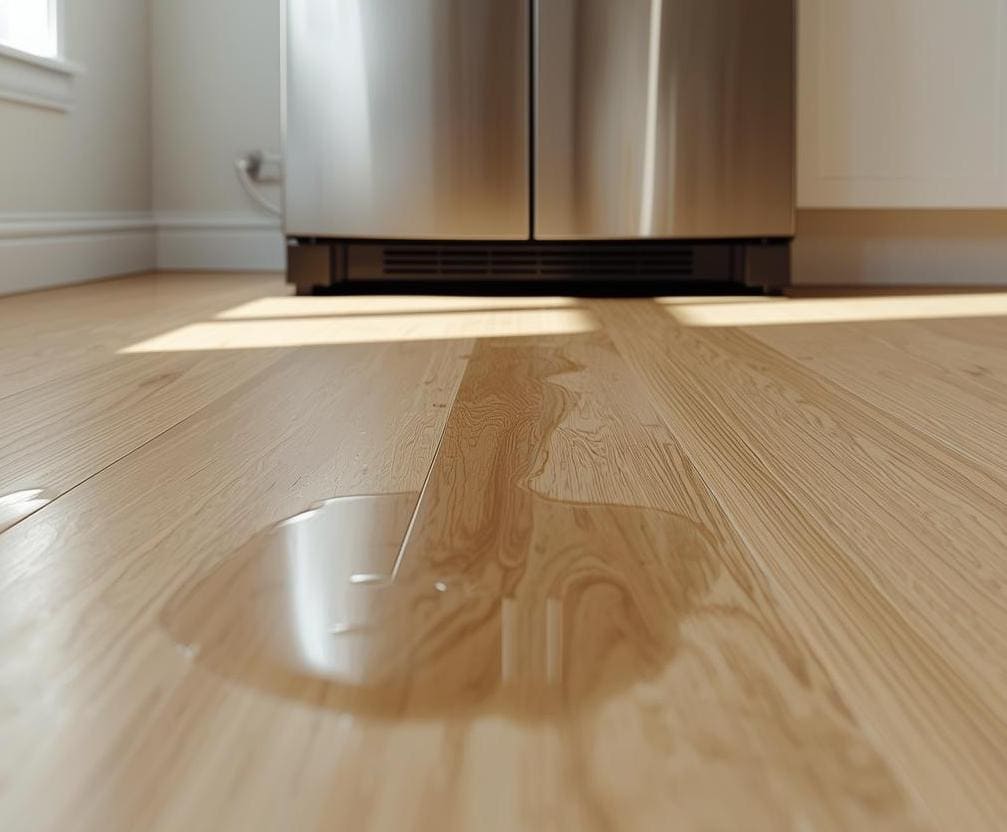
Cooling problems and water leaks often show up together because they both involve the defrost system.
Don’t ignore leaks. Floor damage happens fast.
Typical causes:
When to Call a Fridge Repair Service
Waiting too long can turn a minor airflow problem into a major sealed system repair.
You should schedule service if:
Fridge stays above 40°F
Food is spoiling
Cooling is inconsistent
Water keeps pooling
The compressor keeps clicking
The issue returns after unplugging
Why Denver Homeowners Call Local
Colorado’s dry climate means dust builds up faster than most homeowners expect. That dust settles on condenser coils and internal components, slowly reducing cooling efficiency. Add to that Denver’s seasonal temperature swings, where appliances may work harder in summer and sit in colder garage environments during winter, and refrigerators experience more stress than average.
Many homes here also have garage-installed refrigerators. Those units face wider temperature fluctuations, which can directly affect compressor performance and temperature regulation. Power fluctuations in certain neighborhoods can also impact electronic control boards, especially in modern GE models.
A local fridge repair company sees these patterns every day.
Instead of guessing, experienced technicians understand how Denver’s climate and home layouts affect cooling systems. That context allows for faster diagnosis and more accurate GE fridge repair, whether it’s a basic airflow issue or a deeper mechanical problem.
Don’t Let a Cooling Issue Turn Into a Replacement

When a General Electric fridge is not cooling, early diagnosis makes all the difference.
What starts as → Can turn into:
Need GE Fridge Repair in Denver?
Schedule service with a trusted Denver refrigeration repair service team and get your kitchen back to normal.