


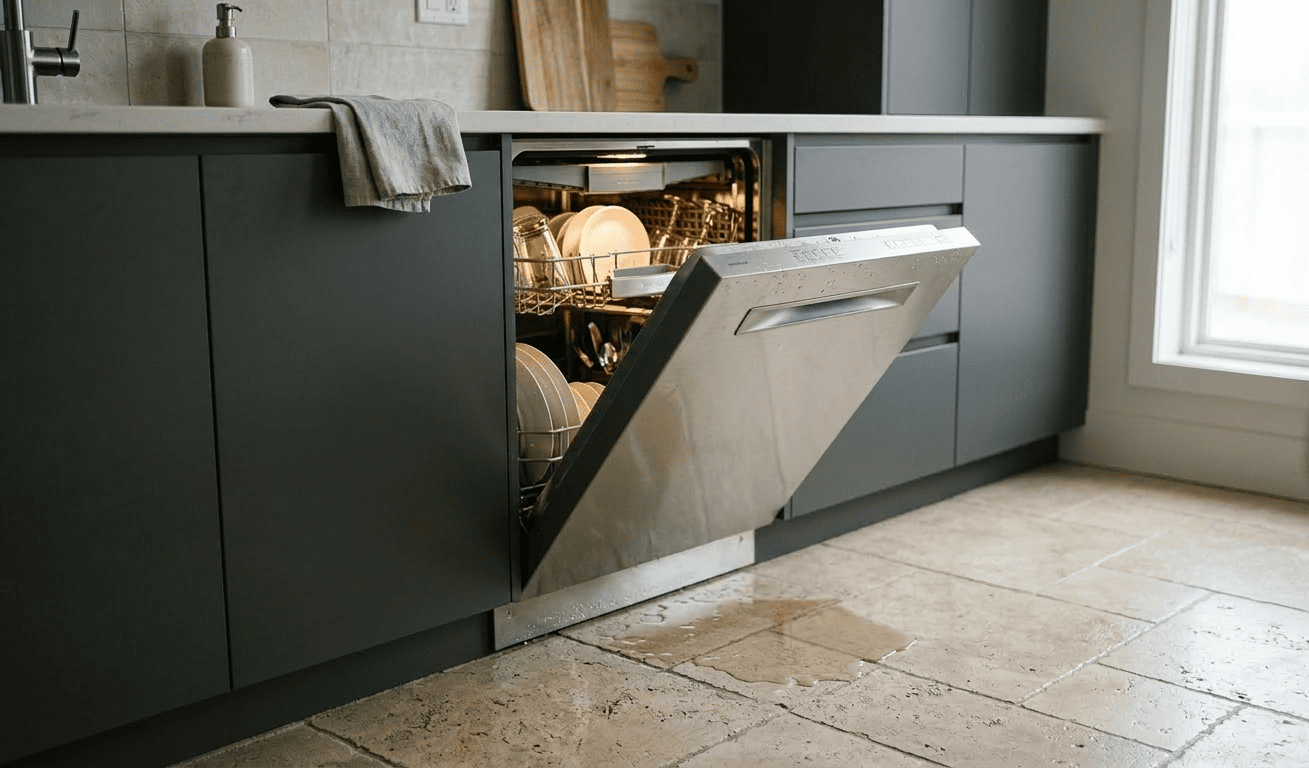
A leaking dishwasher rarely happens “out of nowhere.” It usually starts as a small, almost invisible issue — until one day you notice water where it definitely shouldn’t be.
If your KitchenAid dishwasher is leaking, the key is not just to stop the water, but to understand why it started in the first place. Let’s break it down in a clear, practical way.
Where Is the Water Coming From?
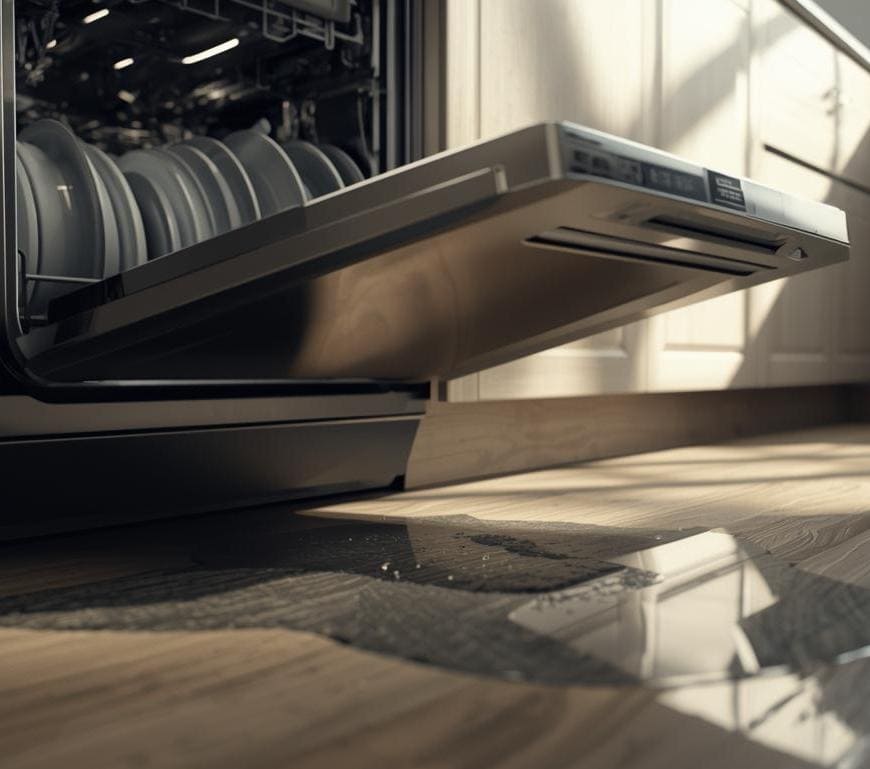
Before jumping to conclusions, take a quick look at where the leak appears. The location often tells you more than the leak itself.
1. The Door Seal Isn’t Doing Its Job Anymore
Over time, the rubber gasket around the door can lose its flexibility. Even a small gap is enough for water to escape during a wash cycle.
This is one of the simplest issues — but also one of the most overlooked.
You might notice:
2. You’re Loading It… Just a Bit Wrong
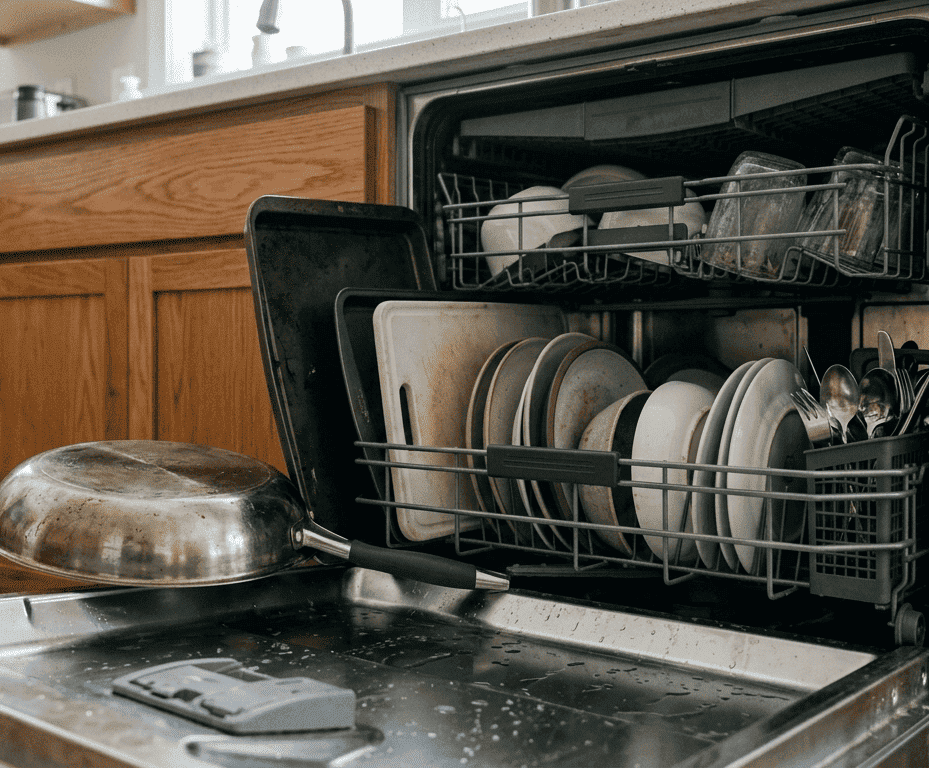
It sounds harmless, but dish placement can actually redirect water flow inside the machine.
Large pans or plates can:
3. The Spray Arms Are Creating Chaos
When spray arms become clogged or damaged, they don’t distribute water evenly anymore.
Instead of smooth rotation, you may get:
4. Internal Hoses or Connections Are Loose
Not all leaks are visible from the outside. Some happen quietly underneath the unit.
Possible causes include:
5. Too Much Detergent = Too Many Bubbles
Using the wrong type or too much detergent can create excess foam. And foam doesn’t behave like water — it expands, pushes, and escapes.
If you notice:
6. The Dishwasher Isn’t Sitting Level
A slightly tilted appliance can shift how water moves inside.
Even a small imbalance can:
Why You Shouldn’t Ignore a Dishwasher Leak
A small leak today can turn into a much bigger (and more expensive) problem tomorrow.
Fixing the issue early is always the smarter move.
Water damage can affect:
Your flooring
Kitchen cabinets
Electrical components
The lifespan of your appliance
Final Thoughts
Whether it’s a worn seal, a hidden internal issue, or something as simple as detergent, the sooner you identify the cause, the easier it is to fix.
And if the problem isn’t obvious? That’s where a professional diagnosis makes all the difference.
Need Help With a Leaking Dishwasher?
don’t guess — get it checked.
Our experienced technicians provide fast, reliable dishwasher repair
and will pinpoint the issue before it turns into costly damage.
👉 Schedule your service today and get your kitchen back to normal.